
Blog

New paper: How SAM terminal groups influence perovskite interfaces?
We are pleased to announce the publication of a new research article in ACS Materials Au, entitled “Terminal Group Effects on Molecular Organization and Charge Extraction in Self-Assembled Monolayers/Perovskite Interfaces”. The study investigates how the chemical nature of terminal groups in self-assembled monolayers (SAMs) influences their molecular organization and, consequently,

BRICS Perspective on the Stability Challenges of Perovskite Technologies
We are pleased to announce the publication of a new perspective article in RSC Energy Advances, entitled “Perovskites beyond efficiency: stability challenges from space to Earth”. Authored by researchers from Brazil (André F. V. Fonseca and Prof. Ana Flávia Nogueira), Russia (Lyubov A. Frolova and Pavel A. Troshin), and China (Jianyu Yuan),

Ana Flávia Nogueira stands out as one of the 100 leading scientists in Brazil
🌟 Professor Ana Flávia Nogueira Recognized Among Brazil’s Top 100 Chemists and Top 50 Materials Scientists by Research.com The Laboratory of Nanotechnology and Solar Energy (LNES) proudly congratulates Professor Ana Flávia Nogueira on being named among the 100 best scientists in Brazil in Chemistry and the top 50 in Materials

Published Paper: Can chelatogenic molecules enhance the stability of air-processed MAPbI3 perovskite solar cells? A case study of salophen
New publication explores chelating molecules to enhance perovskite stability Perovskite solar cells have gained significant attention in recent years due to their high efficiency and low fabrication cost. However, their long-term stability remains a major challenge, as the perovskite layer is highly sensitive to moisture, oxygen, temperature, and UV radiation.
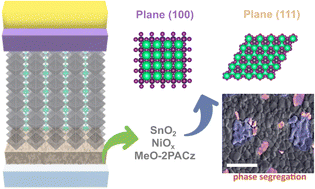
Published Paper: The influence of the buried interface on the orientational crystallization and thermal stability of halide perovskite thin films
New Publication in Journal of Materials Chemistry A! We are excited to share our latest research article published in Journal of Materials Chemistry A, titled: “The influence of the buried interface on the orientational crystallization and thermal stability of halide perovskite thin films” This study sheds light on how the
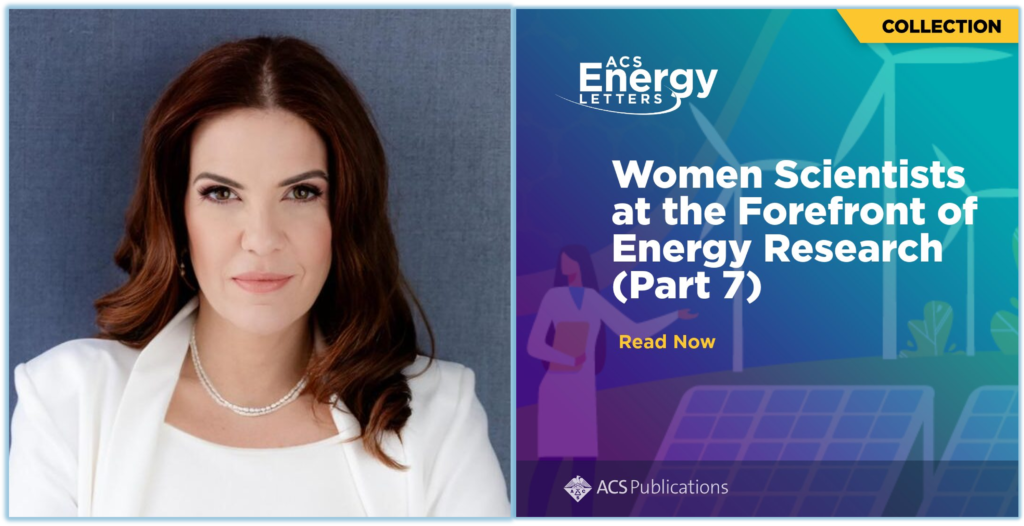
Prof. Ana Flávia Nogueira Featured Among Women Leaders in Clean Energy Research
Earlier this year, ACS Energy Letters published a special article celebrating women who authored seminal works in the field of clean energy throughout 2024. The journal invited these leading scientists to share their personal reflections on what inspired them to pursue careers in clean energy research and how they became

Group’s Participation in the XXII B-MRS Meeting
Participation in the XXII B-MRS Meeting 2024 The XXII Meeting of the Brazilian Materials Research Society (B-MRS), held from September 29th to October 3rd, 2024, gathered the global materials science community at the Blue Med Convention Center in Santos, São Paulo, Brazil. Organized by the B-MRS and its committee, the
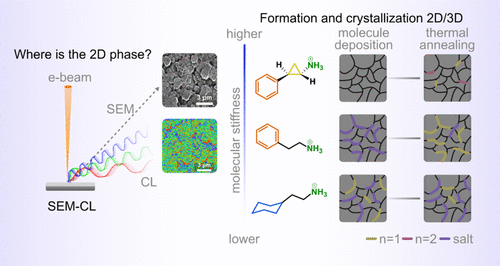
Published Paper: 2D Phase Formation on 3D Perovskite: Insights from Molecular Stiffness
New Publication in ACS Applied Materials & Interfaces! We are excited to announce the publication of our latest research paper in ACS Applied Materials & Interfaces, titled: “2D Phase Formation on 3D Perovskite: Insights from Molecular Stiffness” This study investigates the relationship between molecular stiffness and the formation of two-dimensional
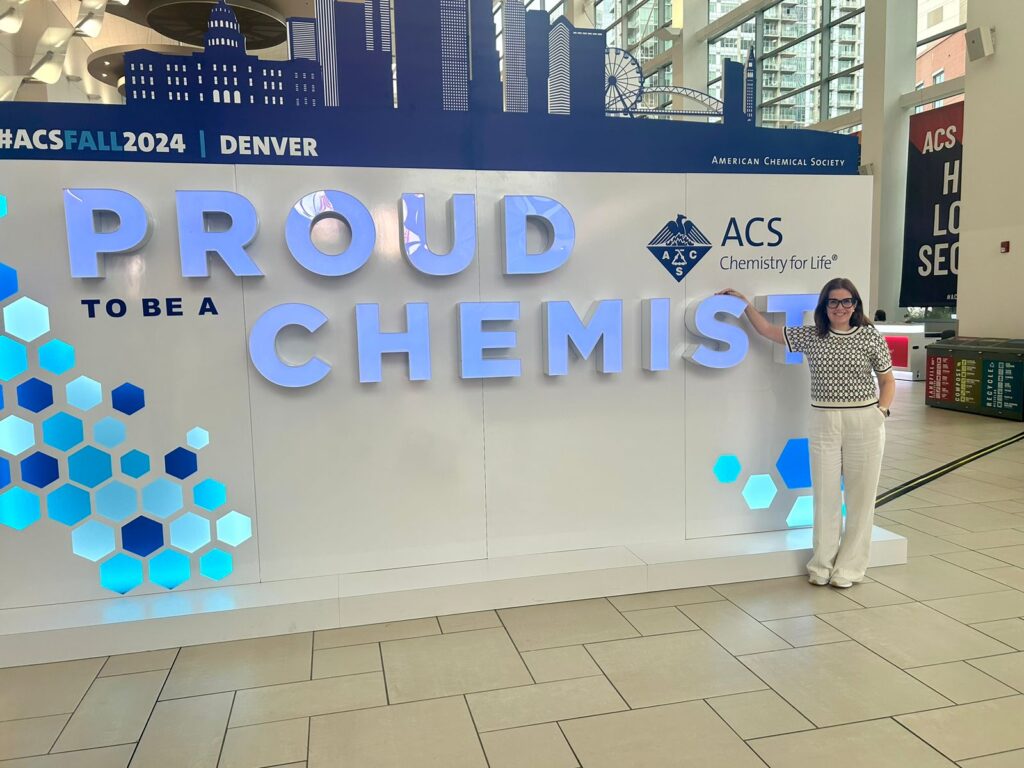
Ana Flávia Nogueira participated in the ACS Fall Meeting 2024 in Denver
We are thrilled to share that Professor Ana Flávia Nogueira actively participated in the ACS Fall 2024 Meeting, held in Denver, Colorado, from August 18-22. This year’s meeting, themed “Elevating Chemistry,” brings together some of the brightest minds in the field to explore diverse topics such as sustainable chemistry, chemical
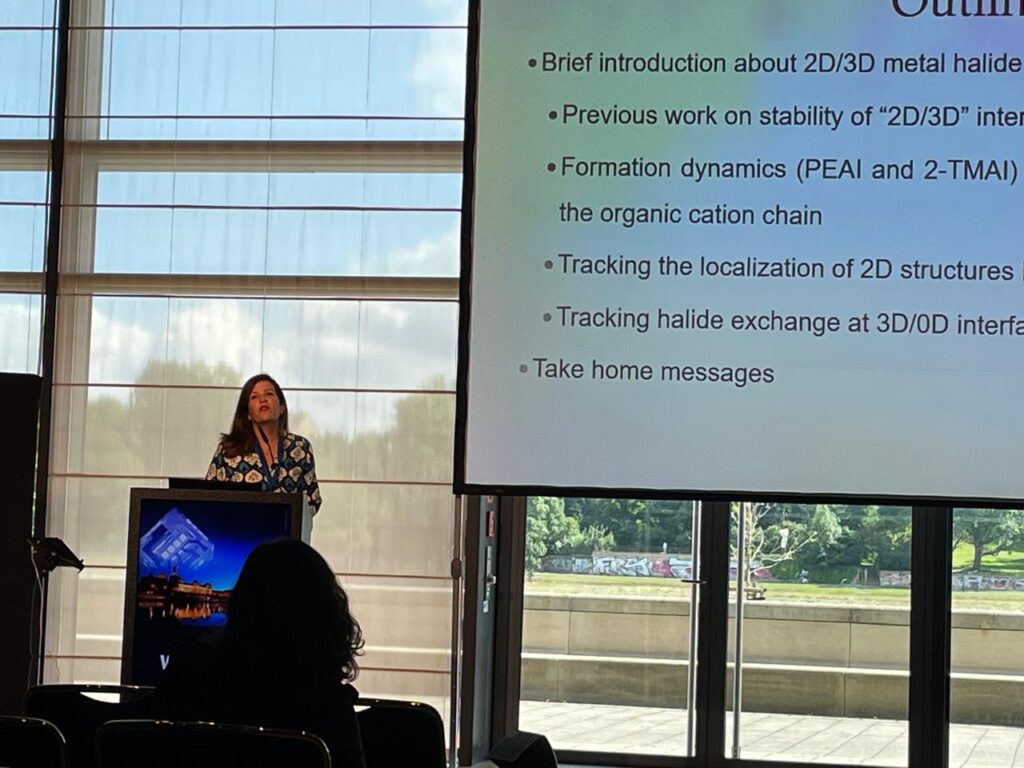
Professor Ana Flávia Nogueira Speaks at ICSM 2024 about Advances in Perovskite Solar Cell Interfaces
Professor Ana Flávia Nogueira recently participated as an invited speaker at the prestigious International Conference on Science and Technology of Synthetic Electronic Materials (ICSM 2024). The event, held in Dresden, Germany, from June 23-28th, is the largest conference dedicated to organic electronics, with a rich history of showcasing groundbreaking developments
- 1
- 2


